The New Body Standard We’re Noticing But Not Talking About
May 04, 2026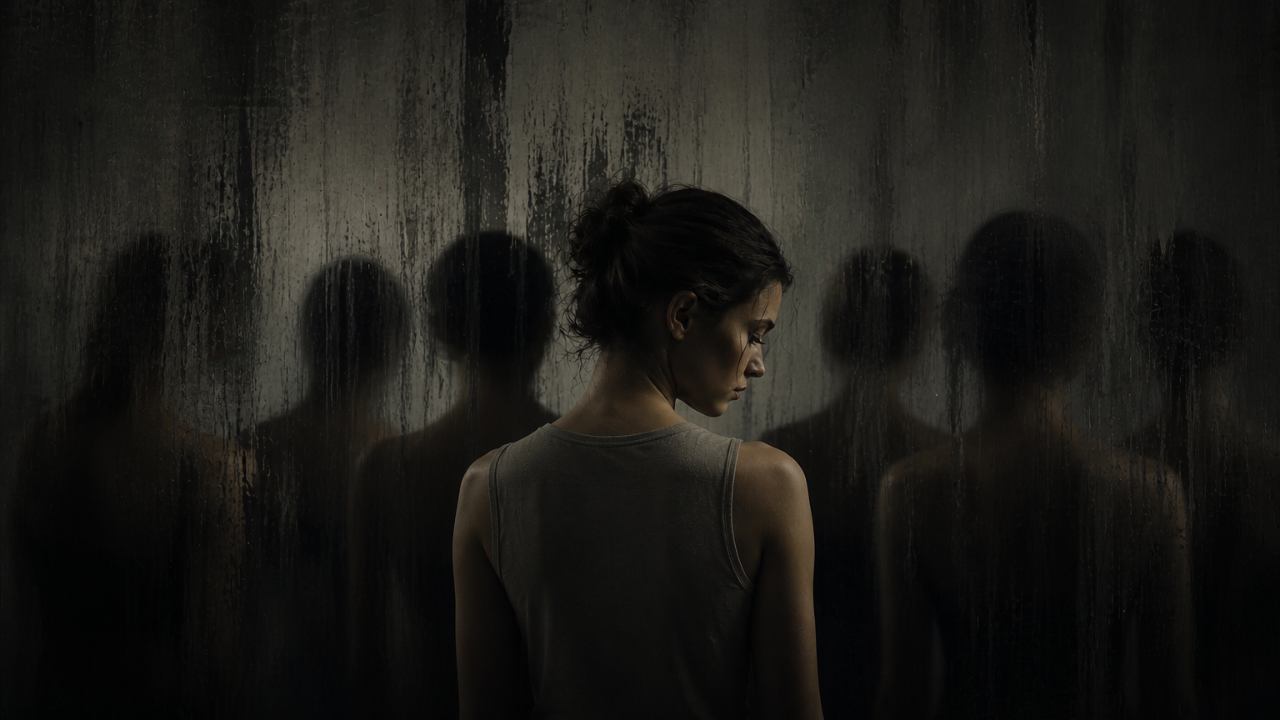
Everywhere we turn lately, people are talking about going on or being on a GLP-1. It’s usually framed as a health decision. They want to “feel better,” “get healthier,” or “take care of themselves.” And I understand that for some people, that may very well be true. There are very legitimate and necessary uses for this medication and that cannot be ignored. But if we’re being real here, a lot of what's underneath this sudden surge of prescriptions is much simpler: People want to be thinner. And that's fine but let's be clear that “thinner” and “healthier” are not synonymous.
What I'm really here to discuss though is this: There is a “look” that is becoming more and more common, and I’m not going to lie, it makes me nervous. People aren’t just getting thinner. A lot of them are starting to look under-fueled in a way that feels very extreme and even frightening. Hollowed faces. Bones jutting out. Skin that hangs in ways you don't usually see at these younger ages. Sunken eyes (you don't necessarily need a fat transfer, you might just need to eat). Bodies that look worn down and malnourished. Mismatched proportions that make it clear the body should not look that way. Scary, frankly.
You have likely seen people that you know who are losing weight and, at first, you may think they look good, but then it keeps going to a point where they become almost unrecognizable. It’s concerning, and that’s putting it mildly.
It's true, some people are naturally thin, but that’s not what I’m talking about here. I’m talking about a very specific look and a drastic change that suggests a body is being pushed beyond what's sustainable.
This issue is prominent in Hollywood. We know that industry is full of those kinds of pressures and demands. How many times have we had to read about Oprah's weight loss journey over the years, as if from all of the incredible things she's done in her career, that's the most interesting thing about her?? But this doesn't stay in celebrity culture. It very much trickles down to us and we are now seeing this in regular everyday people. The people who live in our communities. Neighbors, friends, parents. People we actually know.
Now, I want to be clear about what I am and am not saying.
I am not diagnosing strangers. I don’t know people’s medical histories, prescriptions, or private struggles. This isn’t about judging individual bodies or turning weight loss into a moral issue. Anyone can make choices about their body. It’s also not a blanket condemnation of medication. I firmly believe that these medications have their important uses.
And I know the pushback here. “Rachel, we’re not supposed to comment on people’s bodies.” I agree when it comes to individuals. But ignoring a broader cultural shift because we’re afraid to say anything doesn’t help either. This isn’t about judging people. It's about the dangerous new body standard that is becoming normal. It’s about paying attention to what we are starting to accept without any questions.
I also want to say this clearly: If you are on this medication for a legitimate medical reason and it has improved your health or your quality of life, this is not about you. The concern isn’t about responsible use. It’s about what is happening culturally, and the growing number of people who are starting to look unwell in ways that are not just being overlooked but actually being praised.
Remember, *many* things can be true at the same time.
We can respect that people have their own circumstances and body autonomy, and also recognize when things start to feel like they've gone too far. We can acknowledge when something is shifting culturally that could have very negative effects for our health and well-being. Because when a noticeable number of people start looking this way, it stops being just about individual bodies. It starts to shape what we think is "typical." Even people without significant histories of body issues are reporting having struggles with their bodies because the new “norm” has become so much smaller.
We are living in a cultural moment where extreme thinness is being pitched as “prioritizing health.” Appetite suppression, which used to set off alarms for people, is now being shared loud and proud on social media and celebrated in the same comments section your teens are reading. Rapid weight loss, which we once knew is not a good thing with potential for serious health implications, is now applauded as “getting healthy” and "self-improvement" (so many fire emojis 🫠).
Medications like Ozempic are part of this landscape, but they are not the whole story. Even among people who are not taking these medications, the message is very clear: Less is better. Eat less. Need less. Take up less space.
Hunger itself is being treated as something to override rather than listen to. Everything is “food noise” now. Even basic, biological hunger cues.
I work with disordered eating and eating disorders, so I’m particularly attuned to what under-fueling can do to the mind and body. I see how the mind and body feel and (don't) function when they are in a state of serious nutritional deprivation.
You can see it over time. Less energy. Less strength. Bodies that look worn down and ill. We’re also downplaying things that would have raised real concern not long ago. Feeling cold all the time. Hair loss. Dizziness. Gastric issues. Constant headaches. Loss of menstrual cycles. Loss of muscle mass. Low energy. Even a kind of emotional flatness, now known as “ozempic personality.” These are being waved off as common “side effects” and minimized. But even if they’re common, many of them are serious and can have real long-term consequences.
I’ve seen how complimenting “self-control” and the “you look sooo good” comments quickly turn into praising not eating enough. And for some people it can spiral into full on eating disorders in efforts to keep the weight off.
What feels most worrisome is not any one individual body. It’s the larger shift in what we now treat as a “goal.” Bodies that look sickly are being held up as evidence of beauty, health and success.
The irony is, we’re very quick to express concern when someone is in a larger body, but when someone loses a significant amount of weight and starts to look unwell, that same concern tends to fade, even though that’s when it may be needed the most. Expressing concern for those people is labeled as jealousy or “hating” (I get that often). At the same time, many of the same behaviors we would be concerned about in a very thin body are being praised when they happen in a larger one. It’s a pretty striking double standard.
And… young people are watching all of this.
They’re learning what a “normal” body looks like based on what they see around them. And right now, what they’re seeing is getting narrower and narrower. It's very far from "normal."
Teenagers and young adults, especially young girls, are absorbing these messages and images long before they have the tools to question them.
They don’t just see it. They internalize it. They are picking up on what gets attention, praise, and what gets called beautiful. They’re learning that hunger is something to conquer, that shrinking is something to strive for, and that taking up less space is something to feel proud of.
Even if they never go near a weight loss medication, the message still sticks with them. The cultural permission to eat less, skip meals, and disconnect from their bodies is constantly there.They are learning thinner is better, no matter the cost. And some of the adults in their lives are reinforcing this.
And again, two things can be true.
Medications can be appropriate and even life-changing for some people, and the culture surrounding them can still become extreme in a way that’s not healthy.
Naming that isn’t fear mongering or judging. It’s responsibility.
Health is not synonymous with shrinking or the absence of an appetite. And a body that looks hollowed out, exhausted, or frail is not necessarily a body that is thriving, no matter how common that look has become.
When I notice how many people now look physically unwell, I don’t feel judgment. I feel concern. Concern about how misguided our definition of health has become, and concern about what happens when an entire generation grows up thinking that disappearing is better than being fully here.
Our bodies are instruments that help us live fully in this world, not ornaments to be ogled and objectified according to an ever changing, unattainable “beauty standard.” They are meant to be fueled, supported, and lived in. They are supposed to be diverse in shape, size, and abilities. That is not a mistake. People in bigger bodies don't have a thin person inside just waiting to get out. Health is about so much more than your physical body.
If we could actually pause and reflect on what we are seeing and valuing right now, maybe we could open up a productive conversation about this. Maybe we could push back and move away from control and deprivation, and instead toward nourishment, strength, and presence. Toward bodies that look alive and take up space.
If you’re raising kids in this, talk about it. Don’t assume they’re not noticing. Help them question what they’re seeing and remind them that bodies are not meant to be shrunk into submission. Pay attention to how food, weight, and bodies are being discussed at home, because kids absorb far more than we realize. And most importantly, model a relationship with your own body that is rooted in care, not control.
For those struggling personally, this might be a moment to stop and check in with your body rather than override it. Hunger, energy, mood, and strength are not problems to fix. They are signals worth listening to.
❤️❤️❤️
Stay connected with news and updates!
Join our mailing list to receive the latest news and updates from our team.
Don't worry, your information will not be shared.
We hate SPAM. We will never sell your information, for any reason.
