The Problem With Everyone Becoming an “Expert”
May 19, 2026
I’ve gotten a lot of messages lately asking me to publicly condemn the online tactics of Adina Miles (Flatbush Girl) as “against halacha (Jewish law).” And while I understand why people want a clear statement from me, I’ve intentionally avoided using my platforms to make public declarations about what is or isn’t halachically acceptable, because that’s not my role or expertise.
I am not a halachic authority. I’m a therapist.
That does not mean I have no concerns about what she’s doing with her most recent campaign. I absolutely have concerns about consent, emotional vulnerability, pressure, coercion, power dynamics, shame, and encouraging people to share intimate parts of themselves online without fully understanding the permanence and implications of that exposure. Those are areas I do feel professionally comfortable speaking about and I've made those concerns known.
But I think the fact that so many people expect a therapist to publicly declare what is or isn’t “assur (against Jewish law),” “frum (religious),” or acceptable Jewish observance actually points to a much larger issue right now. We’ve created a culture where everyone is expected to have an opinion on everything, and where very few people stop to ask whether they actually have the knowledge, experience, context, or qualifications to responsibly speak on it.
There is a very big difference between being a culturally informed clinician and positioning yourself as someone qualified to determine religious observance for others. Therapists and mental health professionals need to be very careful about that distinction, especially online. Once therapists begin speaking with certainty (and rigidity) about religious law and someone else’s observance, therapy can stop feeling emotionally safe. People should be able to speak honestly in therapy without fear of being spiritually evaluated or judged by their clinician.
Some people already avoid therapy because they worry they’ll be misunderstood or viewed as “bad Jews” rather than complex human beings. Blurring the line between therapy and religious leadership can reinforce those concerns and push struggling people even further away from the support they may really need.
But the therapist-halacha question is really just one example of a much larger phenomenon.
People increasingly want the voices they already follow and trust online to validate their opinions, beliefs, and emotional reactions, even when those people are speaking far outside of their actual role. Social media can create this strange illusion that if someone is influential, relatable, or familiar enough, their opinion should matter on everything.
Sign on to any social app and you'll see. Everyone has a platform now. Everyone has a course, a podcast, a following, and an audience. Confidence is instant credibility. If someone sounds convincing enough online and has a lot of followers, people assume they know what they’re talking about.
The accountant becomes the relationship guru. The mom becomes an expert on complex family dynamics. The makeup artist becomes a nutrition coach. Someone fixes their own marriage and suddenly starts teaching couples how to heal theirs (in just 90 days!). The divorcee is a life coach now. Someone loses weight and starts giving personal training tips and body image advice. Someone becomes popular online and people begin treating their opinions like professional qualifications. I could keep going….
We’ve somehow created a culture where people experience one personal success and immediately feel qualified to teach everyone else how to do the same, “If I can do it, so can you!” (that's not how it works).
People love certainty and confidence. They love quick and easy. Black and white. Good and bad. Here's the problem, here's the solution. People who speak in absolutes and present themselves as having “the answer” instantly go viral. But life is so much more complex and nuanced and most of the time, it isn't black and white. And lived experience, while valuable, is not the same thing as professional training and clinical experience.
Having a successful marriage does not automatically qualify someone to guide couples through hard things. Losing weight does not make someone an expert in physical fitness, body image or nutrition. Being religious does not make someone qualified to treat psychological conditions. And being a Jewish therapist does not make someone a halachic authority.
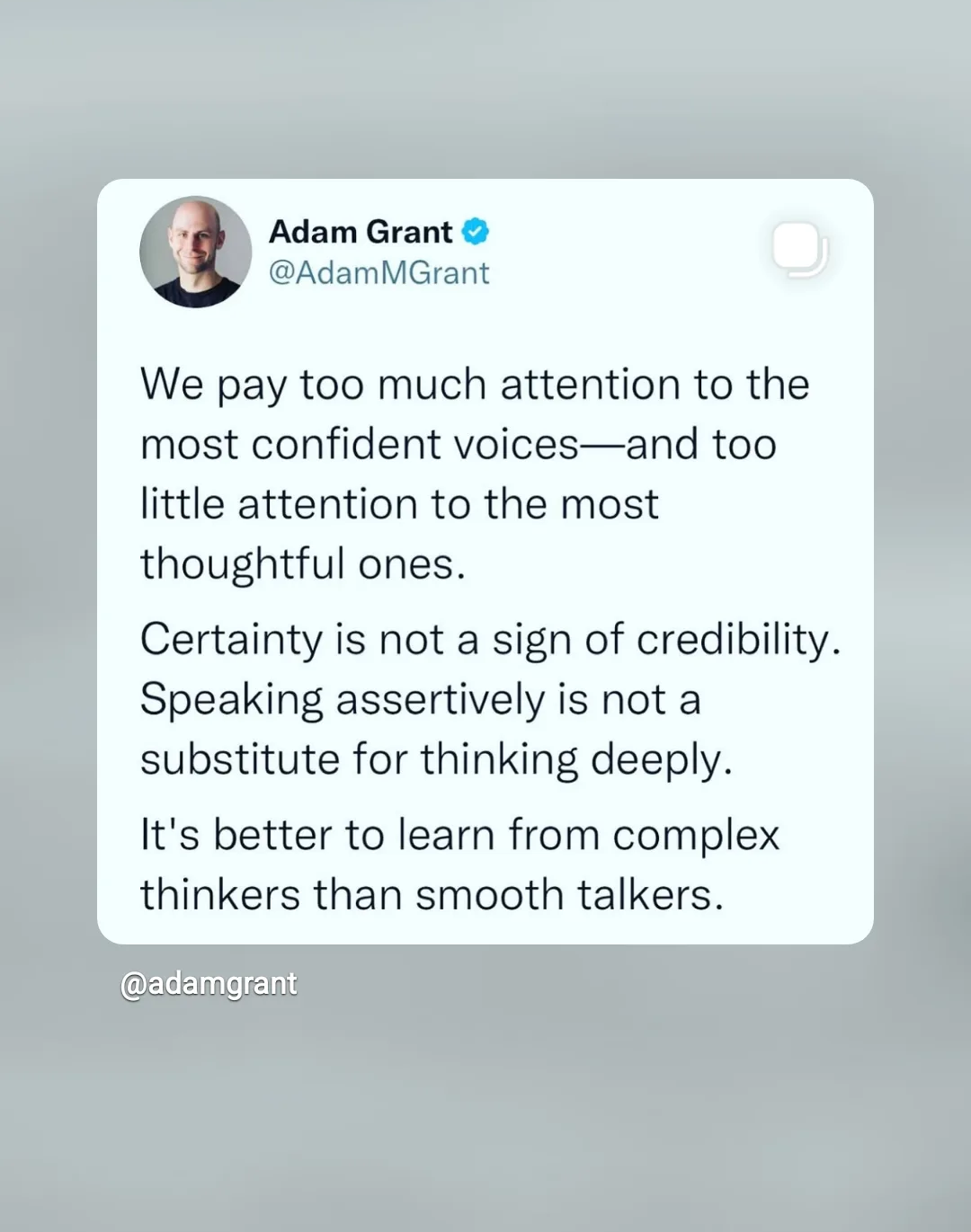
One of the defining features of ethical professionals, and of humility and integrity in general, is understanding the limits of your knowledge and your scope. Recognizing where your responsibility begins and ends is part of what makes someone trustworthy.
And to be clear, a therapist understanding a client’s religious values is absolutely important clinically. Sometimes those beliefs are grounding, stabilizing, protective, and very much connected to a person’s identity and wellbeing. A culturally competent therapist should understand that and work within the client’s value system. But that still does not make the therapist a Rabbi.
This issue is not limited to therapists. There are people with tremendous spiritual wisdom and communal influence who speak about or give guidance on psychological issues with a level of confidence that goes far beyond their training and could be very dangerous.
I am not saying that people should never share experiences, perspectives, or personal growth. Hearing from someone who has struggled can make people feel less alone. And you do not need formal credentials or a professional license to have wisdom or meaningful insight. But there is still a difference between “This helped me” and “This qualifies me to professionally guide others. Here's my course!”
Therapists absolutely do not have a monopoly on helping people. There are plenty of unethical therapists, just like there are unethical people in every field. But trained clinicians tend to understand something important: vulnerable people can be seriously harmed by confident guidance from someone who lacks the knowledge, ethics, training, or self awareness to responsibly help them. When you are dealing with people’s mental health, trauma, relationships, shame, identity, or emotional wellbeing the consequences can be incredibly serious. I’ve had to untangle the aftermath of these kinds of situations before, and it’s never simple or harmless.
Because of this, it’s important that we become more thoughtful consumers of information online.
Before taking guidance from someone, ask yourself:
*What exactly qualifies this person to be giving advice on this topic?
*Are they speaking from lived experience, professional training, or both?
*And if it’s lived experience, can I recognize that even if parts of our situations sound similar, their experience may not actually apply to me?
*Are they acknowledging nuance and limitations, or presenting themselves as having all the answers?
*Do they stay within the boundaries of their expertise, or do they speak with authority on everything?
*And maybe most importantly, how do I actually feel after engaging with this person and their content? More thoughtful and grounded? Or more fearful, dependent, ashamed, emotionally reactive, or vaguely “off” in a way I keep trying to explain away just because they’re popular online?
Sometimes your discomfort is information. Popularity online is not proof that someone is ethical, qualified, or an emotionally safe person. If someone consistently feels manipulative, chaotic, unprofessional, emotionally exploitative, or simply “off,” you do not need to talk yourself out of that feeling. Trust it.
One of the biggest red flags online is when people stop acknowledging the limits of their expertise altogether. People looking for support and guidance online are usually extremely vulnerable. That’s exactly why humility and integrity are so important. When someone trusts you, the consequences of overstepping the boundaries of your role are no longer theoretical.
Sometimes the most responsible thing a professional can say is, “This is outside of my expertise. Let me refer you to the right person.” And for the people sharing your advice and help online, maybe part of wisdom, for all of us, is being able to say, “This taught me something meaningful,” without assuming it makes you qualified to guide everyone else through it.
For further reading on the intersection of mental health and halacha, I highly recommend Nafshi Bishe’elati by Rabbi Yonatan (Yoni) Rosensweig and Dr. Shmuel Harris. Rabbi Rosensweig also gave an excellent talk on this topic at the Altneu synagogue that is available on YouTube: ‘Rabbi Yoni Rosensweig - Halacha Meets Mental Health.’ Fascinating and incredibly important.
And lastly, I also highly recommend Jonathan Shedler’s recent article, What Therapist Ethics is Really About. One of the things I appreciated most about it is that he frames ethics not just as rules professionals follow, but as an understanding of the conditions necessary for therapy to actually feel safe, trustworthy, and effective.
Stay connected with news and updates!
Join our mailing list to receive the latest news and updates from our team.
Don't worry, your information will not be shared.
We hate SPAM. We will never sell your information, for any reason.
